

Stilpnia cyanoptera
Dutch name: Zwartkoptangare
English name: Black-headed Tanager
Synonym: Tangara cyanoptera

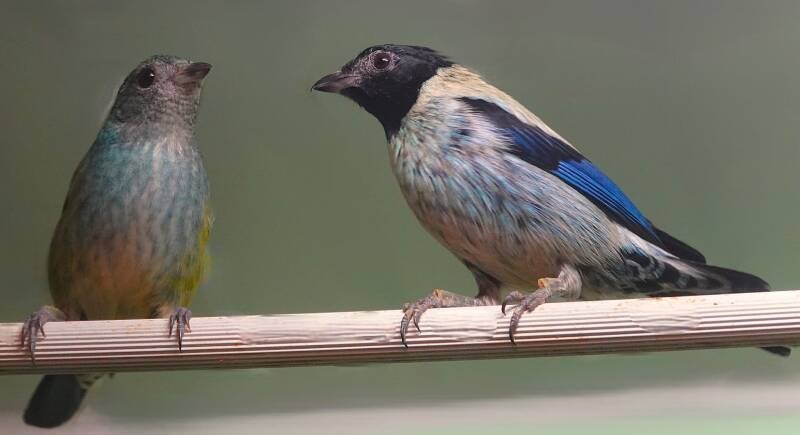
Stilpnia cyanoptera © Chris Bejstrup
The Stilpnia cyanoptera is approximately 13 cm in length and weighs around 18 grams. It exhibits pronounced sexual dimorphism. Adult males have a black head, throat, wings, and tail, contrasting with a yellow- to greenish body and subtle bluish accents on the wings. Females are more muted in color, mostly gray-green, with less contrasting wings and a yellow-green underside.
This species is found in northwestern South America, with populations in Guyana, Colombia, and Venezuela. It primarily inhabits forest edges, secondary forests, and gardens, typically from lowlands to mid-elevation areas, where it is mostly seen in the canopy and along forest edges. Its natural habitat features a warm tropical climate, with average temperatures around 22–27 °C. Temperatures rarely drop below 15 °C and can often exceed 30 °C. Humidity is generally high (often above 70%), with a pronounced rainy season in many parts of its range.
The diet consists mainly of fruits and berries, supplemented with small insects, with the proportion of insects increasing during the breeding season. The species forages actively in pairs or small groups and often joins mixed-species foraging flocks. It is largely resident and shows only moderate territorial behavior during the breeding period. Its vocalizations consist of short, soft calls and simple songs. Breeding usually occurs during the rainy season. The nest is a small, cup-shaped structure placed in shrubs or low trees, and clutches typically contain 2–3 eggs. The incubation period lasts about 12–14 days, after which both parents feed the chicks until they fledge at approximately 14–16 days old.

Clutch of two eggs of Stilpnia cyanoptera
This species thrives in a well-planted aviary with plenty of hiding places. Dense vegetation and branches at different heights encourage natural behavior. It is sensitive to cold; prolonged temperatures below 12–14 °C should be avoided, and moderate humidity is recommended to keep the birds healthy. The diet consists of soft food, fruits, and small amounts of insects, supplemented with minerals and vitamins. The species is generally peaceful but is best kept in pairs. Excessively sweet fruit can cause digestive problems.
Nest material can include coconut fiber or grass, and semi-open nest boxes are often accepted. During breeding, additional insect- or protein-rich food and calcium are important. Parents usually rear their chicks successfully if provided with privacy and minimal stress. Common problems can be avoided by preventing overcrowding, reducing stress, and ensuring a steady supply of insects.
This species is sometimes underestimated; in well-planted aviaries, its behavior becomes more active and interesting to observe.
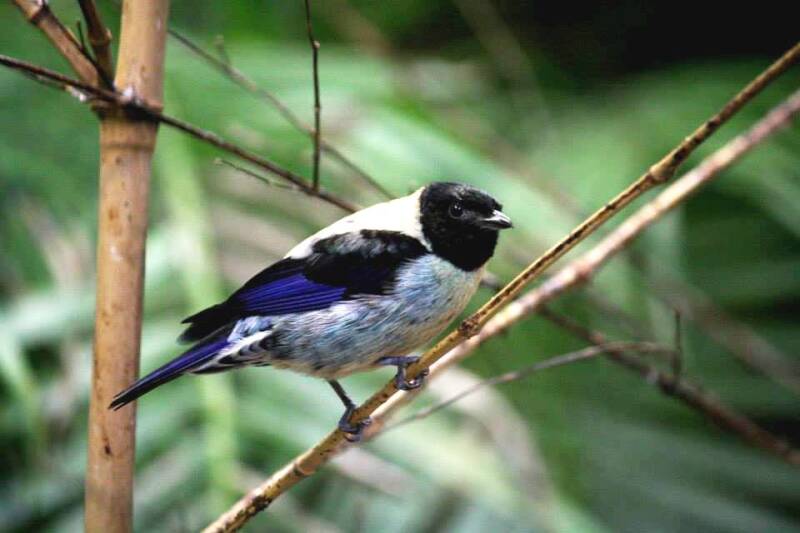
Stilpnia cyanoptera