GENERAL INFO
Tanagers are found throughout Central and South America, the Caribbean, and in a few cases even parts of North America. Their natural habitats range from humid rainforests to lightly wooded areas, forest edges, and shrub-covered savannas.
Most tanager species prefer environments with dense vegetation, which offers protection from predators and provides an abundant food supply. Depending on the species, they inhabit both lowland and mountainous regions, and some undertake seasonal movements in search of fruit and insects.
Tanagers are social and active birds, often living in small groups or pairs. They forage high in the canopy and make use of natural shelter such as shrubs, vines, and tree branches. Their presence across a wide variety of habitats highlights both their adaptability and their need for specific conditions to thrive.
Protecting these natural habitats is essential. Deforestation, agriculture, and urban expansion threaten many wild tanager populations, making a clear understanding of their ecology vital for conservation efforts as well as responsible care in captivity.

Tangara icterocephala
Tanagers have never been very common birds in aviculture. Since the import ban, their numbers among private breeders have declined even further, and unfortunately some species have disappeared altogether. Fortunately, many species are still actively kept today.
A few species, such as Thraupis episcopus, Stilpnia cyanicollis, and Tangara mexicana, are being bred with reasonable success.
Tanagers are not opportunistic birds; they require specific and attentive care. With the right diet, proper housing, and a low-stress environment, they can be kept very well and may even reach a considerable age. In captivity, tanagers that live ten years or more are certainly not uncommon.
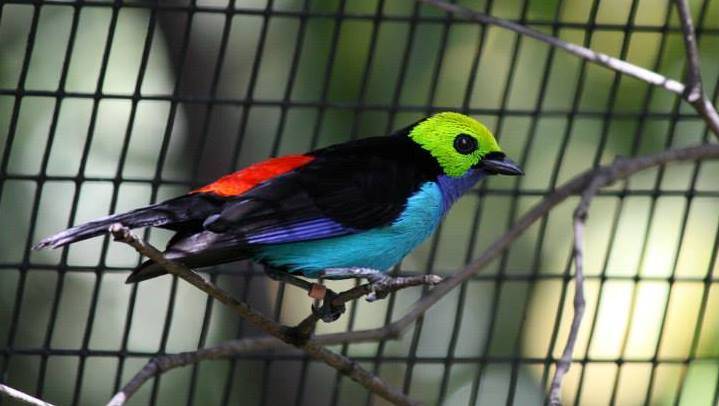
Tangara chilensis © Chris Bejstrup
A variety of tanager species can still be seen in European zoos, although their numbers have decreased significantly in recent years. Ramphocelus bresilia, the Red Brazilian Tanager, is the most commonly kept species and is currently the only tanager managed within the EAZA breeding program (European Studbook). This underscores the importance of careful population management for the species.
As in private collections, zoo-held tanager populations have declined sharply in recent years. Several factors contribute to this trend, including the ban on wild bird imports, the species’ high sensitivity to stress and disease, and the specialized care and housing they require.
Zoos play an important role in safeguarding and raising awareness of these vibrant songbirds. With specialized enclosures and attentive management, tanagers in captivity can often live long, healthy lives and reproduce successfully. This gives visitors the opportunity to observe these stunning birds up close while learning about their natural habitats and the conservation challenges they face.
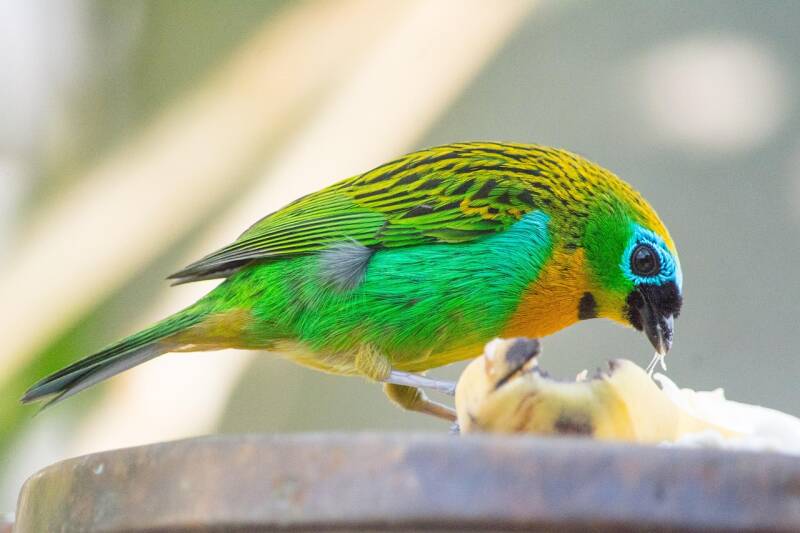
Tangara desmaresti
Although no tanager species have gone fully extinct since 1600, 23 of the 283 known species are listed as threatened on the IUCN Red List. This indicates that these species face an increased risk of decline in the wild.
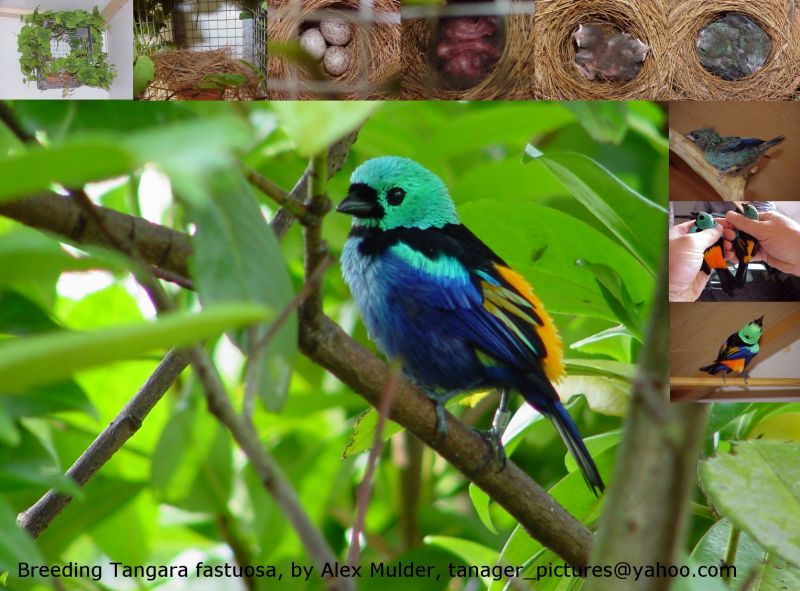
A well-known example is Tangara fastuosa (the Seven-colored Tanager). Around twenty years ago, this species was still being bred successfully in the Netherlands, but it has now almost completely disappeared from private collections.