

BREEDING
When climate, day length, and nutrition are properly balanced, most tanagers will start breeding naturally. However, breeding success still depends heavily on the birds’ health, housing conditions, and overall stability within the aviary or breeding cage. Tanagers are sensitive to stress, and even minor disturbances can negatively affect the breeding process.
Breeding can be encouraged by slightly increasing the protein content of the diet at the start of the season. If a pair fails to breed for a prolonged period despite good conditions, this deserves closer attention. Common causes include underlying illness or parasitic infections, incompatibility within the pair, environmental stress, or inadequate light or temperature conditions. In such cases, veterinary examination is strongly recommended. Even a simple fecal test performed by a specialized avian veterinarian can provide valuable insights. Healthy birds are the foundation of any successful breeding program.
Nearly all tanager species build a cup-shaped nest and readily use wire nest baskets or “green nests” for European birds, filled with suitable nesting material such as coconut fiber, sisal, moss, or fine roots. One exception is the Swallow Tanager (Tersina viridis), which will also breed in enclosed tropical nest boxes. Most species begin nest building quickly once conditions are right, although the pace and division of labor vary by species and even by individual pair.
Most clutches consist of two to three eggs. Incubation lasts between 12 and 14 days, depending on the species (for example, Tangara cyanicollis around 12 days; Tangara arthus about 14 days). Both male and female may incubate, but in most species the female carries out the majority of the incubation.
Well-conditioned tanagers can raise multiple broods per year. In the wild, fledglings often remain with their parents and help care for subsequent broods. In captivity, however, this usually does not work well in smaller enclosures, as the male may begin to chase the young after a few weeks.
Male behavior during breeding varies greatly. Some males actively assist with feeding and remain calm, while others may disturb the female or the chicks. In such cases, it is advisable to temporarily separate the male, while still allowing visual contact with the female. This helps maintain his breeding condition and allows him to be reintroduced without problems for a subsequent brood. For this reason, it is recommended to incorporate a separation option when designing an aviary or breeding cage.
Chicks grow rapidly. During the first weeks, an insect-rich diet is essential. A female is capable of raising the chicks on her own if necessary, but a well-functioning pair is clearly preferable. Fledging usually occurs between 14 and 18 days of age, depending on the species. The young become fully independent after approximately 35 days. If the pair remains in good condition, a new nesting attempt may follow soon after.
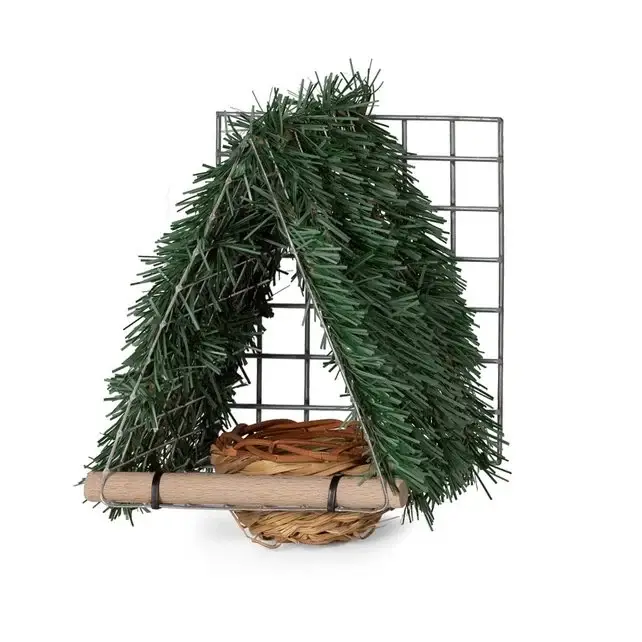


Various types of nesting options are readily accepted by most species. Even a loose coconut nest basket, well hidden among vegetation, is often used. The key factor is that the birds feel safe and well sheltered.
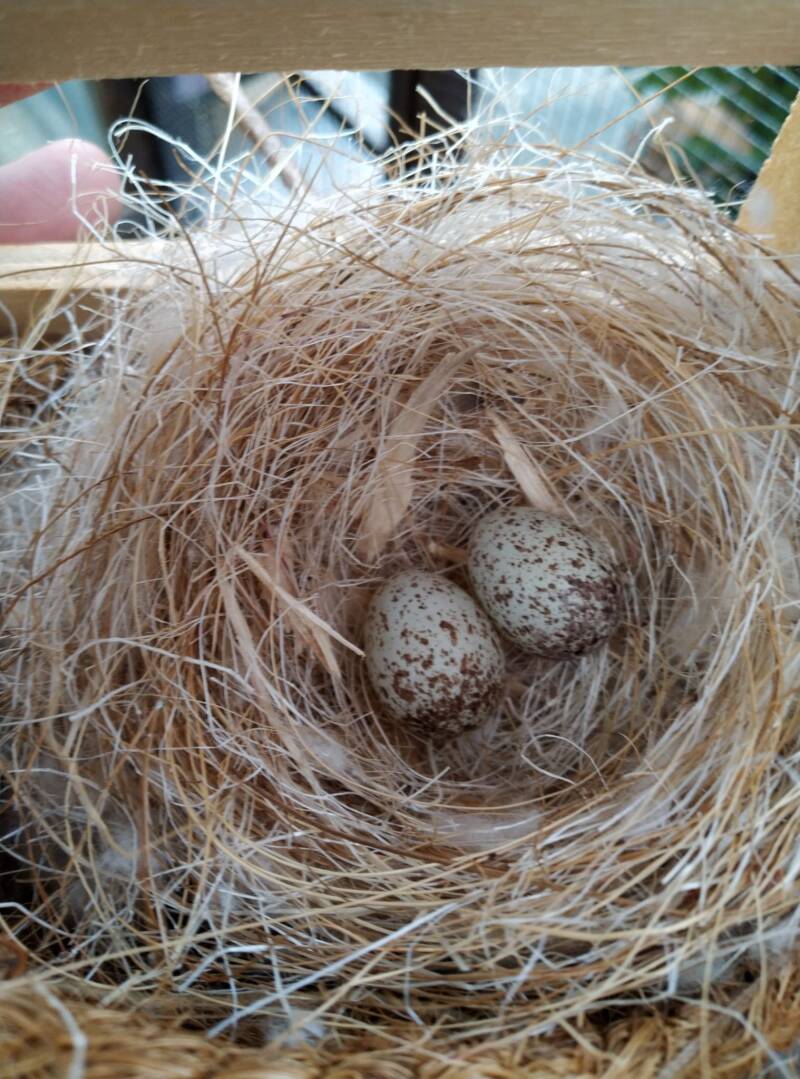
Most species build their nests using coconut fiber, sisal, leaves, and/or moss. Thin twigs and dried grass are also sometimes used. Not all pairs construct an elaborate nest, which is why it is recommended to always provide a coconut nest basket inside the nest box.
Shown in this photo is a nest of Tangara mexicana © Johan Smets
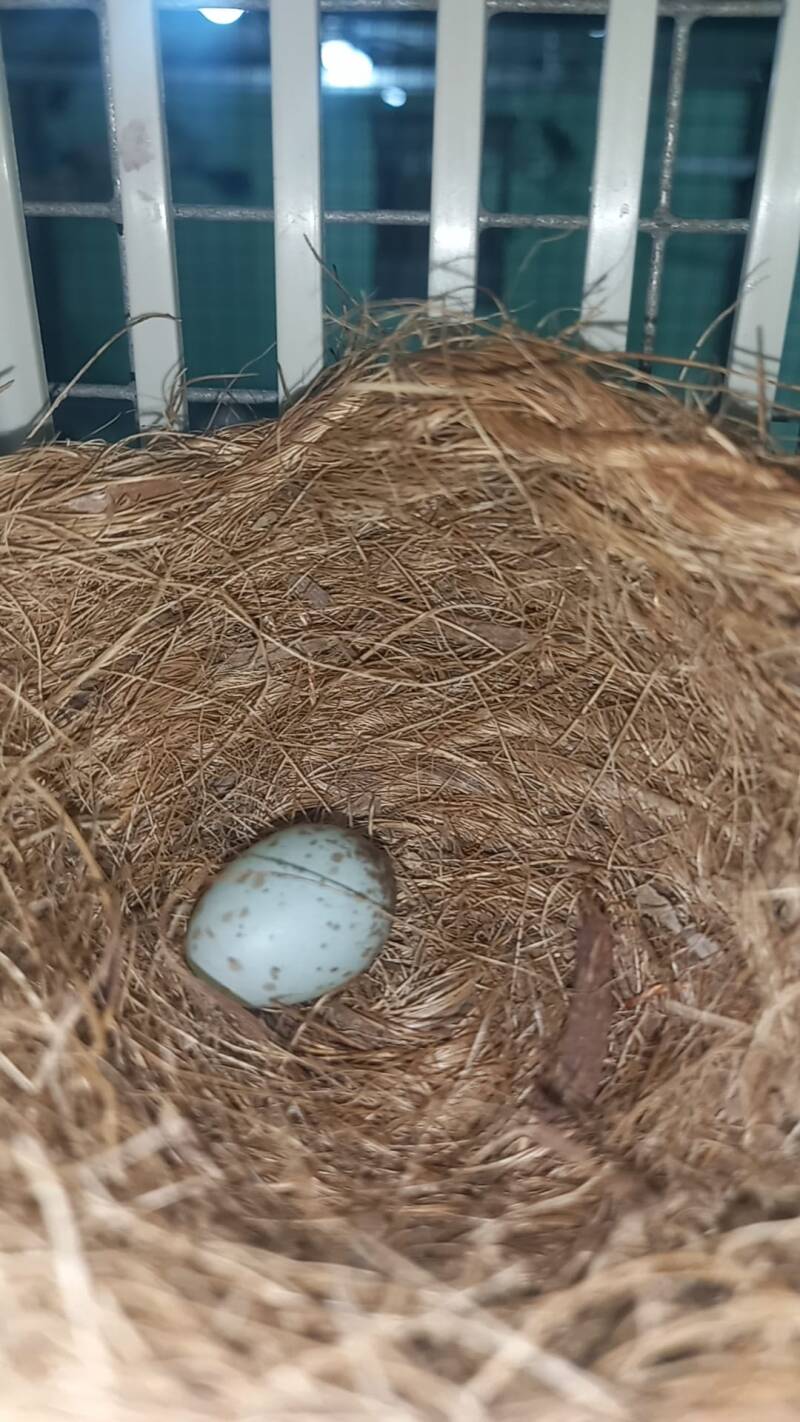
Simple nest of Stilpnia heinei — fortunately, a coconut nest basket was available © Simon Denis
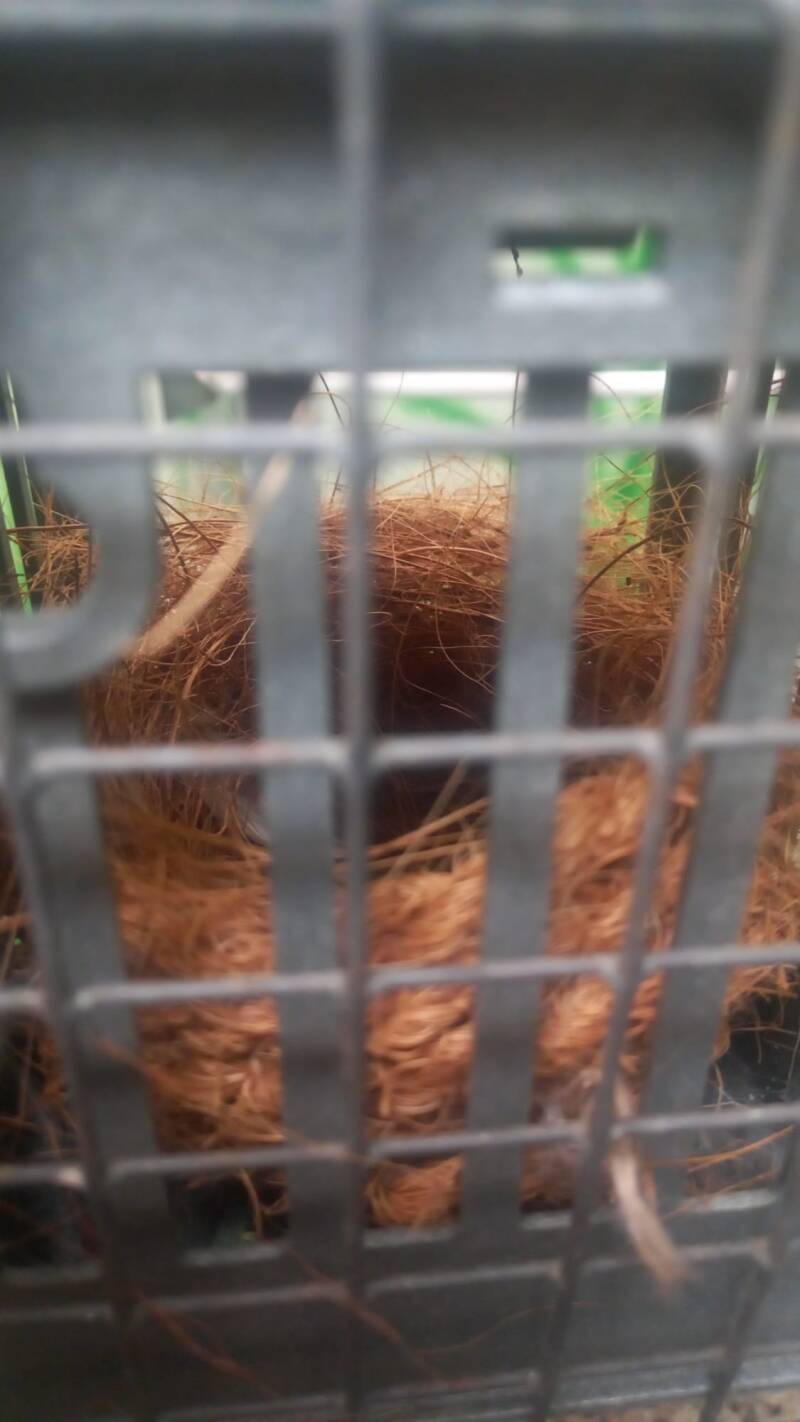
Nest of Thraupis episcopus © Simon Denis
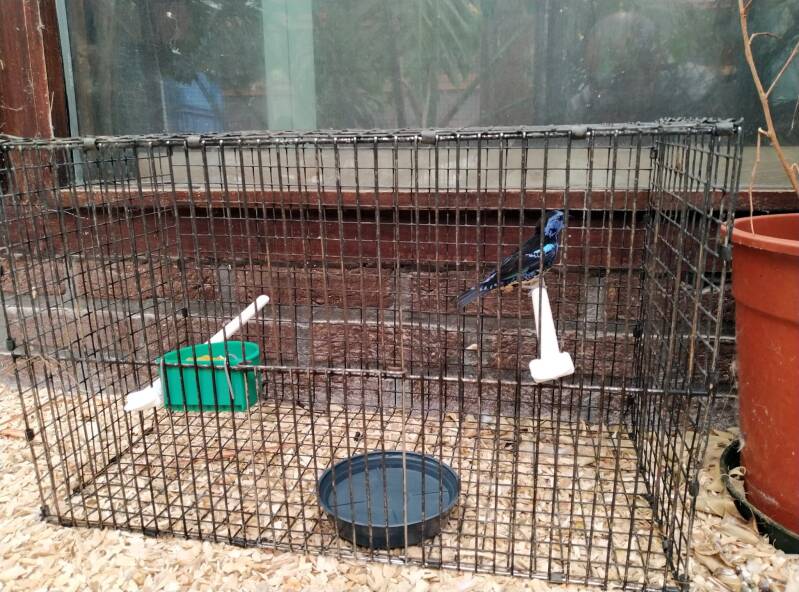
It regularly happens that the male already wants to start a new nest and, as a result, throws eggs or chicks out of the nest. For this reason, it is advisable to temporarily separate the male, while ensuring he remains in visual contact with the female. Once the young have fledged, the male can be reintroduced without any problems. © Johan Smets
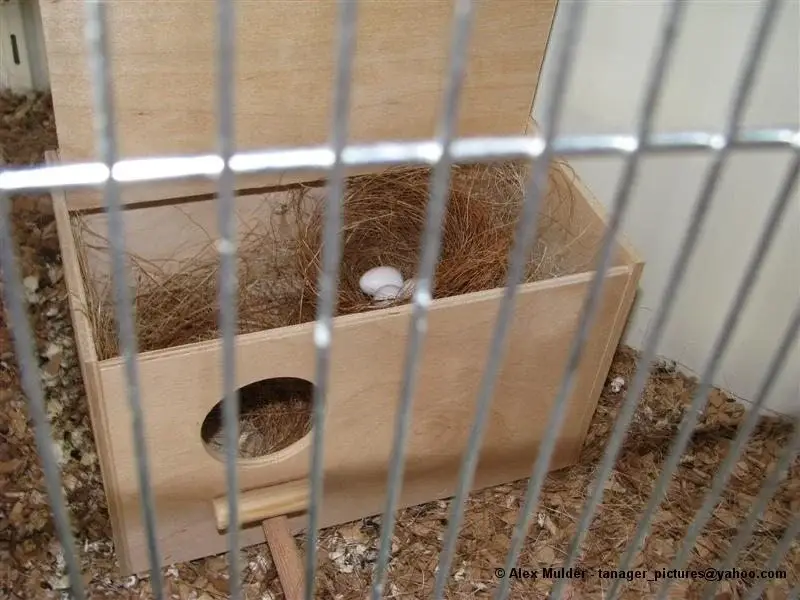


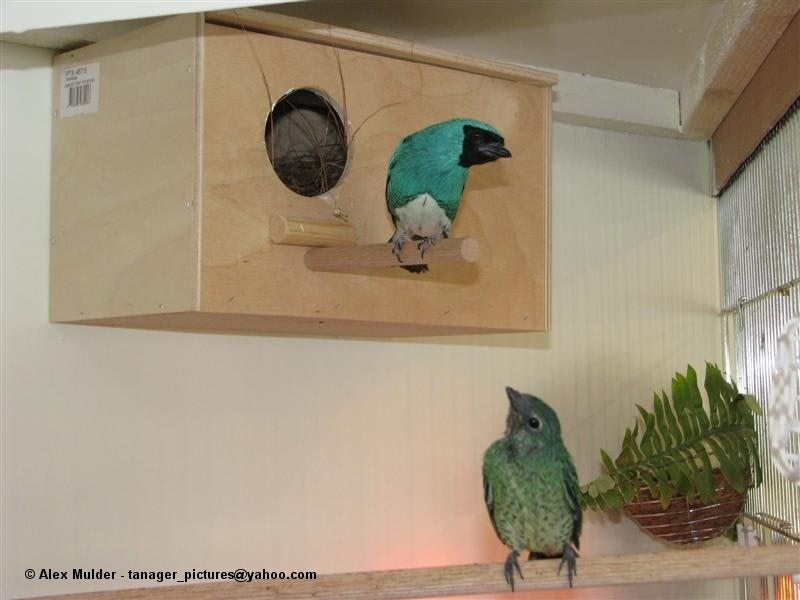
Broedproces bij Tersina viridis © Alex Mulder