

HOUSING
The housing of tanagers always depends on the available space and the purpose for which the birds are being kept. In addition, the specific species plays a major role in determining which type of enclosure is most suitable. Understanding the species’ individual needs is essential. Tanager species are not birds that easily adapt to just any environment. Many are sensitive to stress, and prolonged or repeated stress makes them more susceptible to health problems such as fungal lung infections or atoxoplasmosis. Good hygiene is important, of course, but a well-designed enclosure can prevent many issues from arising in the first place.
Stress-sensitive species require a setup that feels safe, calm, and easy for them to navigate. This affects both the layout and the stocking density: too many birds in too small a space increases the risk of agitation, competition, and disease. For breeding purposes, it is usually best to house tanagers in pairs. This reduces tension and gives the birds the peace and stability they need to breed successfully.
Daily routines, such as feeding or cleaning, can also cause stress, especially in smaller spaces where the keeper must stand close to the birds. In breeding cages, this effect can be greatly reduced by prioritizing length over height or width. If the cage is long enough, the birds can always move away from the keeper and maintain a comfortable distance. This helps them feel less threatened and keeps stress levels lower.
A thoughtfully designed enclosure, spacious, uncluttered, hygienic, and low-stress, forms the foundation for healthy, well-balanced tanagers and directly contributes to better breeding results.
BREEDINGCAGES
For tanagers, breeding cages measuring at least 60 × 60 × 200–250 cm are generally suitable. The extra length provides calm, space to move, and overall stability. It is also practical to include a way to temporarily separate the male while keeping him within sight of the female. This can be useful with restless pairs, when monitoring incubation, or if the male becomes too assertive during chick rearing. A quiet, disturbance-free environment is essential during the breeding period.
Use materials that are easy to clean and avoid dark corners where moisture and mold can accumulate. Furnish the breeding cages with artificial greenery to help the birds feel secure. Breeding cages offer several clear advantages: they provide good visibility, are relatively easy to keep clean, and make it simple to separate birds when necessary.
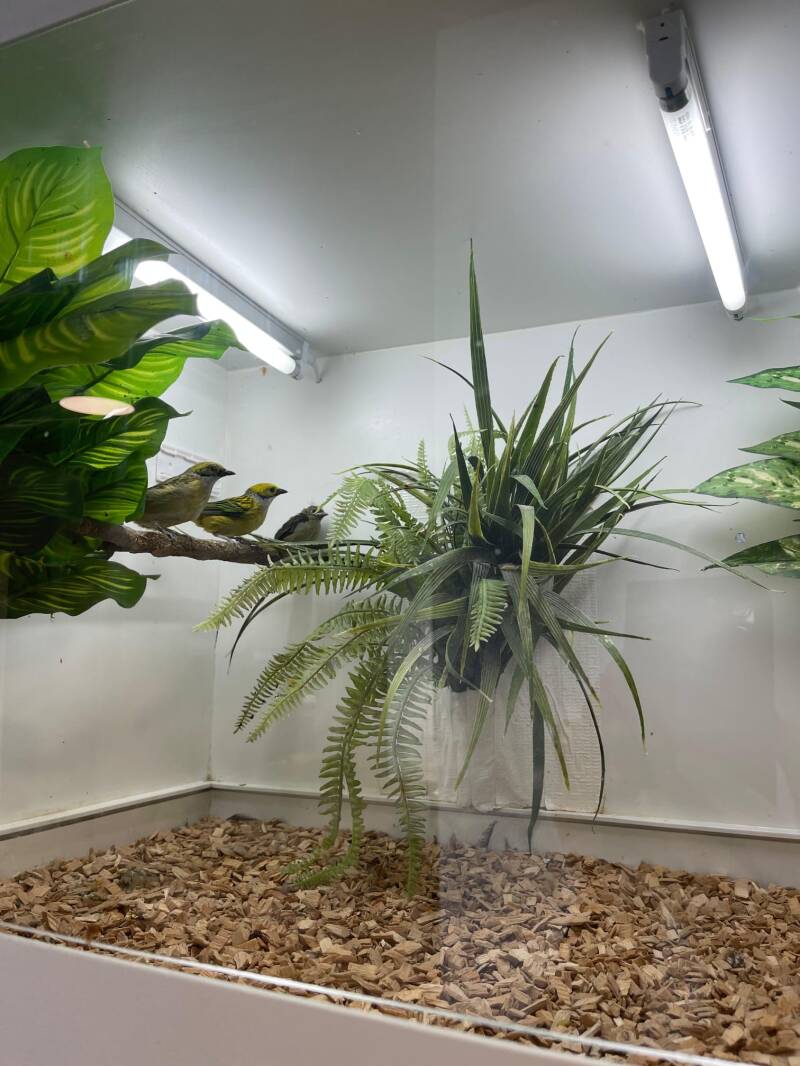
Breeding setup of Alessandro Gimigliano - Tangara icterocephala
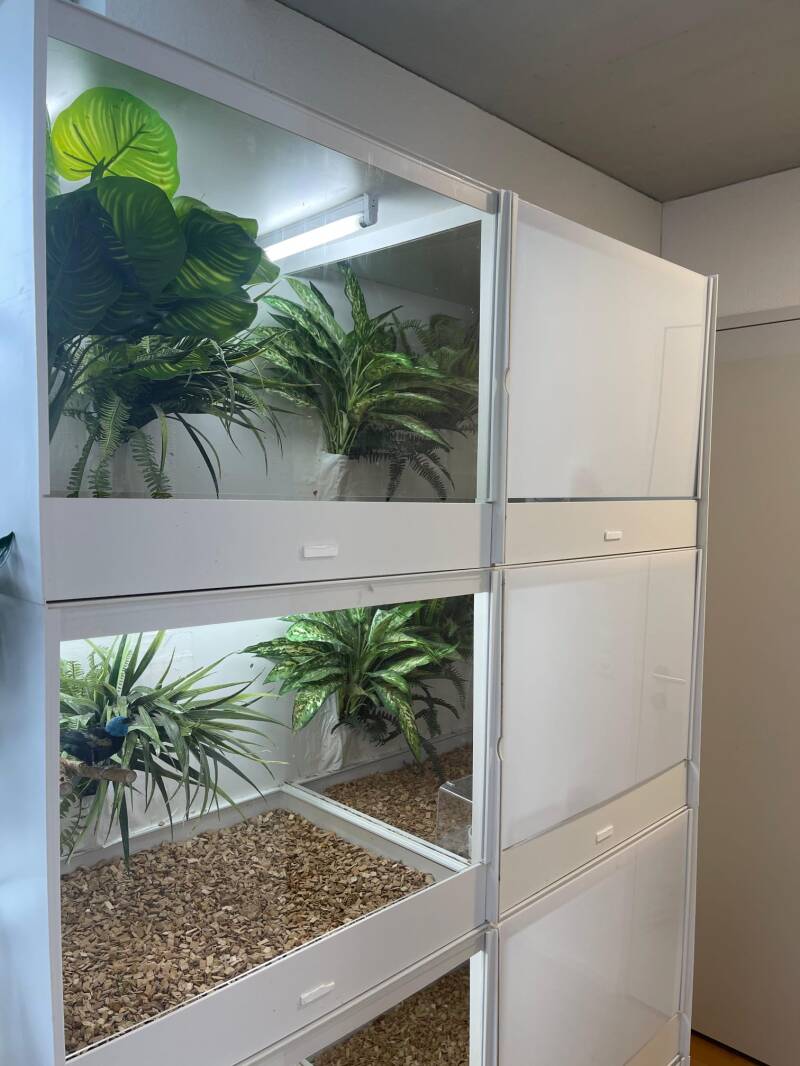
Breedingcages 120x50x50 © Alessandro Gimigliano
AVIARY
A spacious aviary is ideal for tanagers, especially when it is richly furnished with greenery, natural branches, vines, and plenty of hiding places. An L-shaped layout or multiple secluded corners allows the birds to retreat when needed, which helps reduce stress. Outdoor aviaries should include a frost-free, draft-free night shelter. Indoor aviaries can often be arranged more openly and provide greater stability in temperature and humidity.
However, aviaries generally require considerably more space, which not everyone has available. And if we ideally house one pair per aviary, choices must be made regarding the number of tanagers that can realistically be kept. In addition, many tanager species need at least frost-free conditions during winter—preferably around 16 to 18°C. This is especially important because the breeding season of many species is long and often continues through the winter months. For some species, an aviary is therefore an excellent year-round option, while for others it is suitable only during the warmer months.
TROPICAL HOUSE
The greenhouse of Kevin with multiple species of Tanagers © Kevin Hielscher
A well-designed greenhouse or indoor conservatory can provide an excellent living environment for tanagers. Thanks to the bright, warm conditions, many species thrive particularly well in such spaces. Plants like bamboo, ficus, hibiscus, and banana plants offer structure, security, and natural foraging opportunities. However, greenhouses can heat up quickly, so proper ventilation and shading are essential to prevent overheating. During colder periods, the temperature should be kept above at least 12–15°C.
One drawback of a large greenhouse is that it can be more difficult to monitor nests and detect sick or deceased birds. Catching or separating birds is also more challenging in such a spacious, planted environment.


HEATED BREEDINGROOM
A heated breeding room or indoor aviary is probably the best option for these species. You can use breeding cages, small flight enclosures, or even larger indoor aviaries. The main advantage is that you can control the temperature, humidity, and number of daylight hours with precision. I personally breed in such a room, where I can also regulate air quality through ventilation and air filters. This setup allows you to create the ideal environment for these birds.


GROUND COVER
A suitable floor covering contributes to both hygiene and a healthy living environment. Because tanagers are sensitive to fungi and bacteria, a dry, low-dust, and easy-to-clean substrate is essential. Common options include zeolite, beech wood chips, newspaper, or a grate with a collection tray underneath. Avoid moist materials such as peat or thick leaves, as they tend to promote fungal growth. A clean, dry floor significantly reduces the risk of respiratory fungal infections.
LIGHT
Tanagers thrive best with a stable daily rhythm and sufficient light intensity. Natural daylight is ideal, but when this is limited (for example during indoor breeding), full-spectrum lamps (including UV-A and UV-B) are a valuable addition. UV light supports natural behavior, color perception, and vitamin D synthesis. A lighting period of 10–12 hours is suitable for most species outside the breeding season. During the breeding period, this can be extended to 12.5–14 hours, depending on the species.
TEMPERATURE AND CLIMATE
Tanagers originate from (sub)tropical regions and therefore do not tolerate large temperature fluctuations or cold drafts. In winter, a minimum temperature of 12–15°C is recommended for most species, while some feel more comfortable at 16–18°C. Keep in mind that they get through winter better at slightly higher temperatures, which also helps them stay in good condition for the breeding season. Make sure the environment is dry and well-ventilated, without direct drafts. High humidity combined with cold increases the risk of fungal infections. Some species can be kept outdoors (such as Piranga, Tachyphonus, etc.), but they still require a dry, draft-free shelter.
DECORATION
Keep in mind that because tanagers eat a lot of fruit, their droppings are often looser and spoil more quickly. For that reason, all materials used should be easy to clean. In smaller enclosures, it can be practical to use artificial plants that can be washed regularly. Provide plenty of greenery; the birds feel more secure, experience less stress, and are more likely to start breeding. Make sure there are enough branches, spaced far enough apart to help them stay in good physical condition. Also ensure that the feeding area remains clean and easy to maintain, as this is often where birds come into contact with fungi and bacteria.
HygiEne
Hygiene is extremely important for these species. Fruit dishes must be washed daily, and drinking fountains should be cleaned several times a week. The feeding area and the floor should also be cleaned at least once a week. When you decide to keep tanagers, you must be aware that these birds require a fair amount of care and maintenance. Without proper hygiene, they can quickly become ill and may not survive.